Interior Design Fees and Markup: How to Price Your Work
Fixed fee, hourly rate, percentage or markup on furniture: how to choose a fee structure, calculate it from your real costs and explain it clearly to clients.

Most interior designers earn from two sources: a design fee for their time and expertise, and procurement income from the furniture and finishes they source, either as a markup on trade price or as a separate procurement fee. There is no official fee scale in the UK, so the right figures are the ones that cover your costs and your time at a profit. Choose a structure that suits the project, calculate it from your own numbers, write it into your letter of appointment and track the margin as the selection changes.
The main fee structures compared
| Model | How it works | Works best for | Watch out for |
|---|---|---|---|
| Fixed fee | One price per stage or for the whole design service | Well-defined scopes, repeat project types | Scope creep: define revision rounds and deliverables |
| Hourly rate | Time recorded and billed at an agreed rate | Consultations, open-ended or small jobs | Clients watching the clock; you need disciplined time tracking |
| Percentage of project cost | A share of the construction and/or furnishing budget | Larger projects with a firm budget | Fee rises with spend, which some clients distrust |
| Per square metre | A rate applied to the floor area | Repetitive spaces, early estimates | Ignores complexity: a kitchen is not a hallway |
| Markup on trade price (cost plus) | Client pays trade cost plus an agreed percentage | Projects with substantial furnishing | Must be disclosed and applied consistently |
| Procurement fee | Trade prices passed on, plus a fee for ordering and managing | Clients who want full price transparency | The fee must cover chasing, receiving and snagging time |
| Hybrid | Fixed design fee plus markup or procurement fee | Most residential projects | Explain both parts clearly so they do not look like double charging |
Work out your hourly rate from your real costs
Even if you quote fixed fees, you need an hourly rate underneath to know whether a fee is profitable. The calculation below is an example only; replace every figure with your own.
- Target pay: what you want to earn before tax, e.g. £45,000.
- Annual overheads: software, insurance, studio, accountant, samples, marketing, travel, e.g. £15,000.
- Total to recover: £45,000 + £15,000 = £60,000.
- Working hours: 46 weeks × 37.5 hours = 1,725 hours.
- Billable share: admin, sales and sourcing that you cannot bill take time; at 60% billable that is about 1,035 hours.
- Break-even rate: £60,000 ÷ 1,035 ≈ £58 an hour.
- Add profit: with a 15% margin for reinvestment and quiet months, ≈ £67 an hour.
The billable share is where most designers fool themselves. Track your time for a month, including the hours spent copying product details and chasing deliveries, before you settle on a figure.
Turning hours into a fixed fee
For a fixed fee, estimate hours stage by stage (survey and brief, concept, sourcing, design development, presentation, procurement, installation), multiply by your rate and add a contingency for the unexpected. Then make the assumptions visible in the proposal: number of rooms, number of concept options, revision rounds included, number of site visits. Anything outside that list is charged at your hourly rate, and the client knows it from the start.
Stage payments and client funds
Invoice the design fee in stages rather than at the end, so your cash flow follows your work. One possible split, to adapt: a first instalment on signing the appointment, a second on approval of the concept, and the balance when the final scheme is presented. Link each instalment to a deliverable the client can see, not just to a date.
For procurement, avoid funding orders yourself. Ask the client to pay for furniture, or at least the supplier deposits, before you place the order, and state this in your terms. A studio that advances thousands of pounds of stock on behalf of clients is acting as a bank, without the interest.
Markup on furniture: trade discount, markup and margin
Many suppliers offer the trade a discount off retail price. What you do with that discount is the core of your procurement model. First, get the vocabulary straight, because markup and margin are not the same number:
- Markup is calculated on cost: (selling price − cost) ÷ cost.
- Margin is calculated on selling price: (selling price − cost) ÷ selling price.
- A 25% markup gives a 20% margin. Confusing the two is the classic way to earn less than you think.
Example for illustration: a lamp retails at £1,000 excl. VAT and your trade discount is 20%, so your cost is £800.
| Approach | Client pays (excl. VAT) | Your income | Markup on cost | Margin |
|---|---|---|---|---|
| Sell at retail price | £1,000 | £200 | 25% | 20% |
| Cost plus 15% | £920 | £120 | 15% | 13% |
| Trade price + 10% procurement fee | £880 | £80 | 10% | 9% |
| Pass on full discount, no fee | £800 | £0 | 0% | 0% |
Procurement income is not free money. It pays for sourcing, quotes, orders, deposits, chasing, receiving, inspecting, returns and the risk of a damaged item. If you buy as principal, that risk is yours; if the client buys directly and you act on their behalf, it is theirs, and your fee should reflect the difference. Take advice on how this is set up in your terms.
VAT
If you are VAT-registered, you charge VAT on your fees and on goods you resell; private clients will generally think in prices including VAT, so show both clearly. Registration becomes compulsory above a turnover threshold set by HMRC. Check the current threshold and your situation with your accountant.
Transparency: what to tell the client
Clients increasingly know that trade discounts exist. Hidden margins discovered late damage trust far more than a markup explained at the start. Your letter of appointment should state:
- How the design fee is calculated and when it is invoiced.
- Whether you apply a markup, keep any trade discount or charge a procurement fee, and at what rate.
- Whether you receive commission from any supplier.
- How delivery, storage and installation costs are handled.
- Who contracts with the supplier, deposit terms and what happens with returns or defects.
Disclosing the model does not mean showing every trade price on every document. You can present client prices in the client presentation and keep trade prices internal, as long as the basis is agreed.
A worked example: hybrid fee on a two-room project
Illustrative figures for a living room and main bedroom, using the £67 hourly rate calculated above:
| Line | Basis | Amount (excl. VAT) |
|---|---|---|
| Design fee | Fixed: concept, sourcing, presentation, 2 revision rounds | £4,500 |
| FF&E at trade cost | Furniture, lighting, textiles | £18,000 |
| Markup on FF&E | 15% on trade cost | £2,700 |
| Deliveries | Passed on at cost | £600 |
| Client total | £25,800 | |
| Studio income | Design fee + markup | £7,200 |
If the project takes 95 hours including procurement, income per hour is £7,200 ÷ 95 ≈ £76, above the £67 target. If revisions push it to 120 hours, it falls to £60, below target. The lesson is not the exact figures but the habit: compare actual hours with the fee at the end of each project and adjust your next quote.
Track the margin as the selection changes
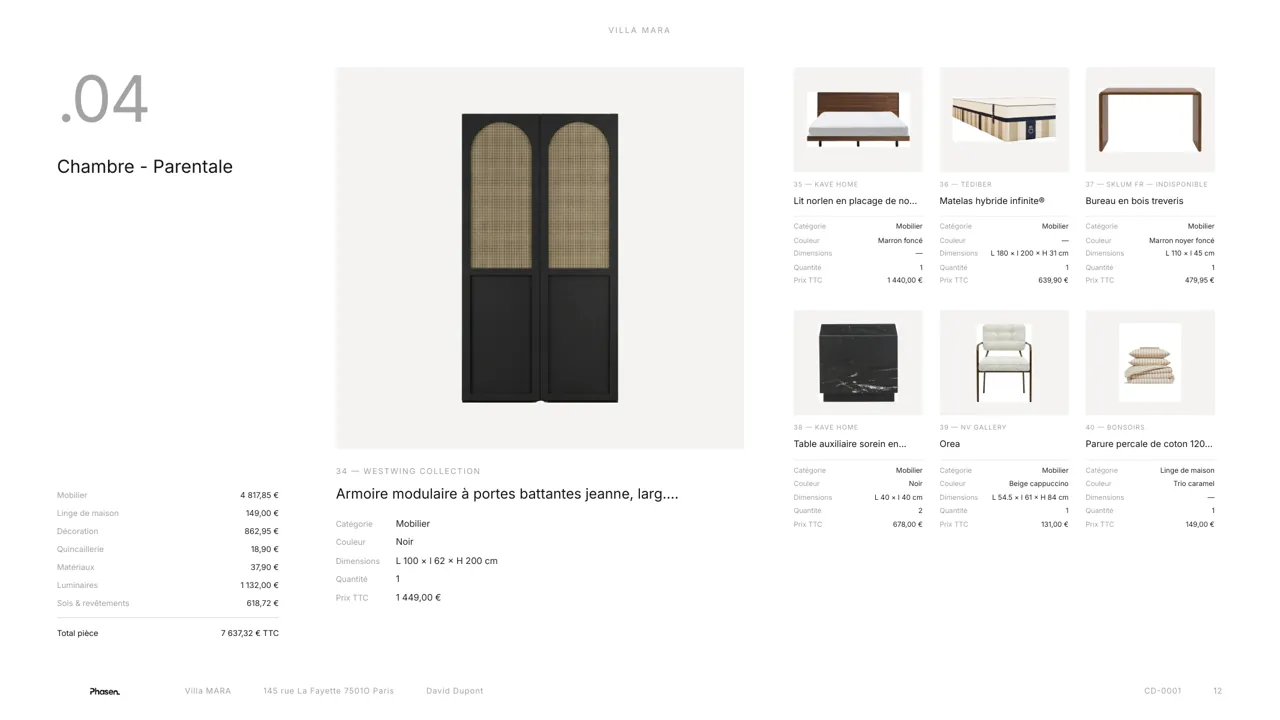
Margins rarely go wrong at the quote. They go wrong when the client swaps a sofa, a supplier changes delivery charges or an item is replaced by a cheaper alternative and nobody recalculates. Keeping trade and client prices in your FF&E schedule is the minimum.
In Phasen, you enter each supplier's discount and delivery terms once; every product then calculates its cost and margin, deliveries are grouped per supplier, and the project's overall margin shows live against the client's target budget in costing and budget. Client documents show only what you choose, and on the Studio plan margins can be hidden from the team. When items are ordered, order tracking keeps status and lead times on the same product. Independent decorators can see how it fits their workflow on the page for decorators, and plans are on the pricing page.
Frequently asked questions
How much do interior designers charge in the UK?
There is no official fee scale, and rates vary widely with experience, location, project size and scope. The most reliable approach is to calculate your own break-even hourly rate from your costs and billable hours, then build fixed fees or percentages on top of it.
What is a typical markup on furniture for interior designers?
There is no standard figure: some designers sell at retail and keep the trade discount, others add a percentage to trade cost, and others pass on trade prices with a procurement fee. Whatever you choose, it must cover the time and risk of procurement and be agreed with the client in writing.
Should interior designers disclose trade discounts to clients?
It is good practice to state clearly in your letter of appointment how you are paid on products, including any markup, retained discount or supplier commission. You do not have to show trade prices on every document, but the basis of your income should never come as a surprise.
Is it better to charge hourly or a fixed fee?
Fixed fees suit well-defined projects and are easier for clients to accept, provided you limit revisions and deliverables. Hourly rates suit consultations and open-ended work. Many studios quote fixed fees but calculate them from an hourly rate and record time to check profitability.
Do interior designers charge VAT?
If you are VAT-registered, you charge VAT on your fees and on goods you resell to clients. Registration is compulsory once your taxable turnover passes the threshold set by HMRC, and voluntary below it. Your accountant can advise on the best set-up for your business.
Try Phasen on your next project.
Free forever for 3 active projects, no credit card required.
Keep reading
All articles ›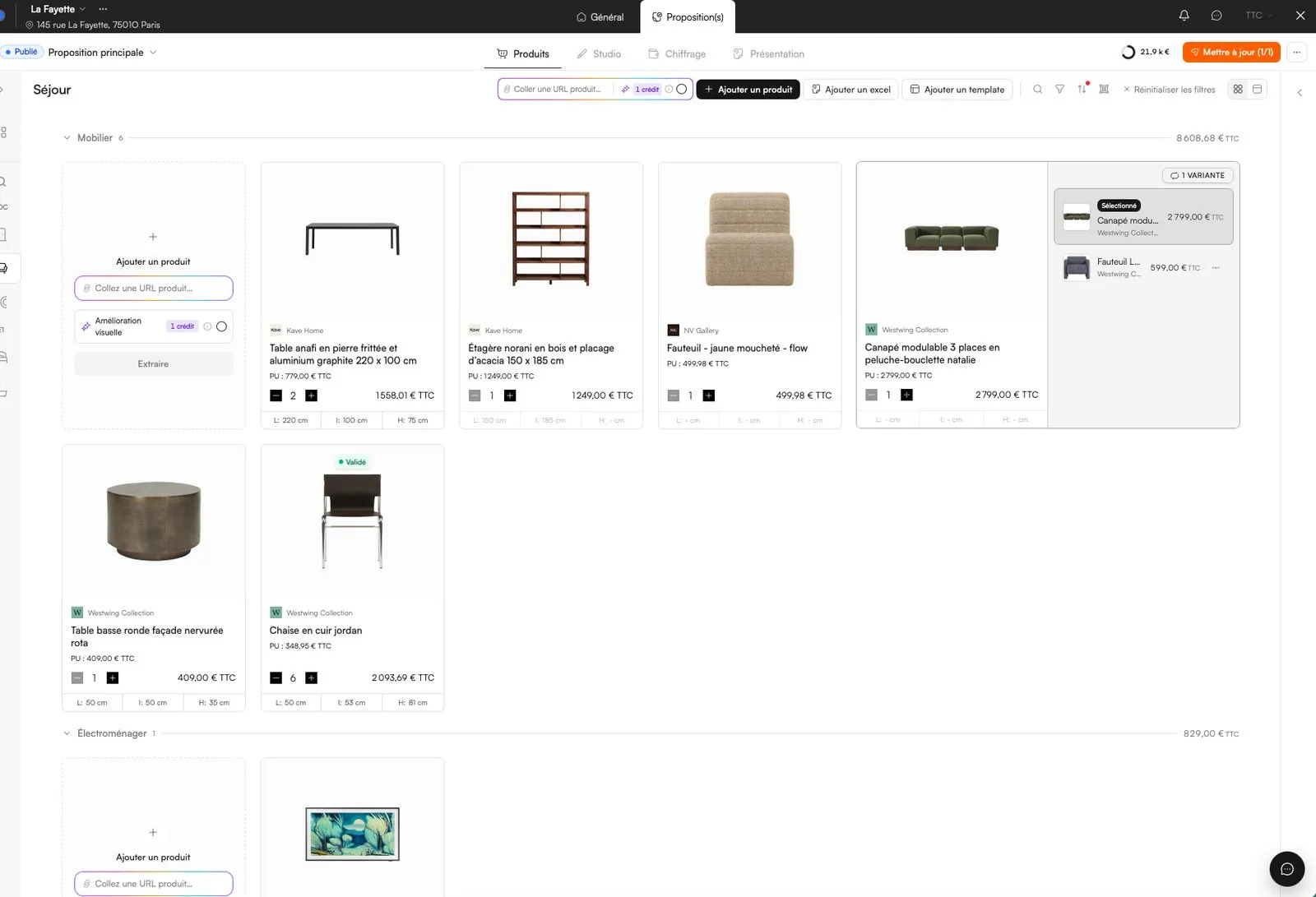
Interior Design Software: How to Choose the Right Stack
The best interior design software is the one that follows your projects from first link to final delivery. Here is how to judge tools against your real workflow, not a feature list.
Read the article ›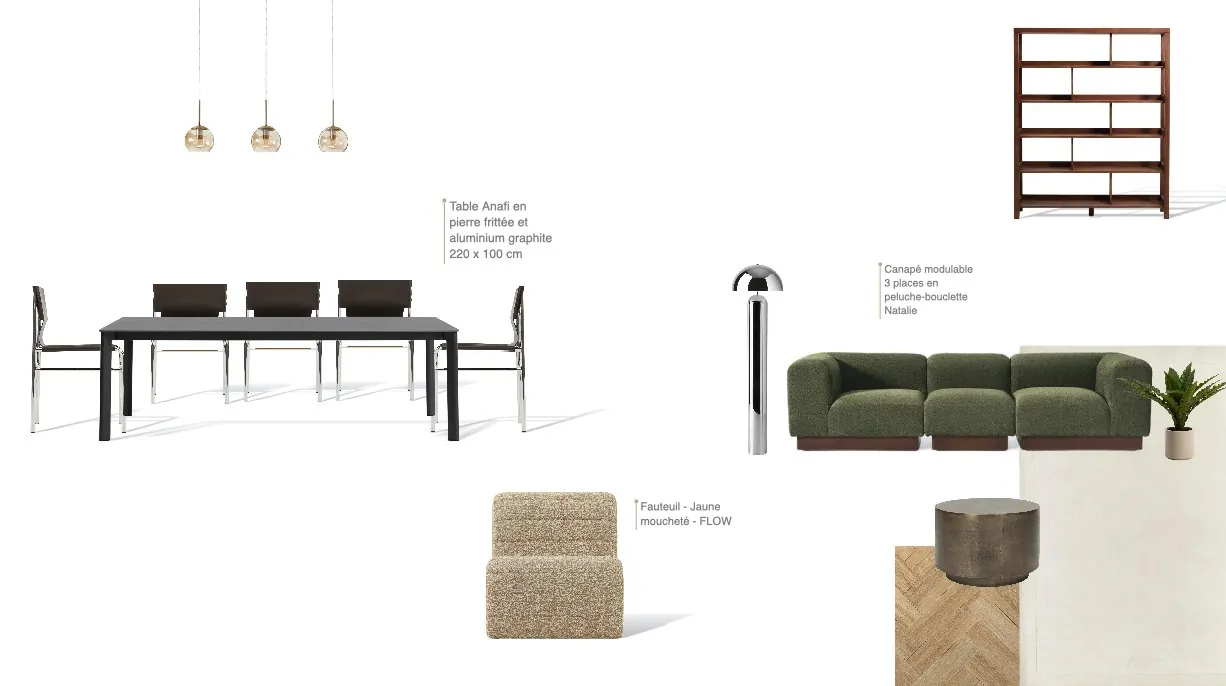
Interior Design Moodboard: A Professional Step-by-Step Guide
A professional moodboard is not a collage: it is the first decision document of the project. Here is a step-by-step method that leads straight to a buildable product selection.
Read the article ›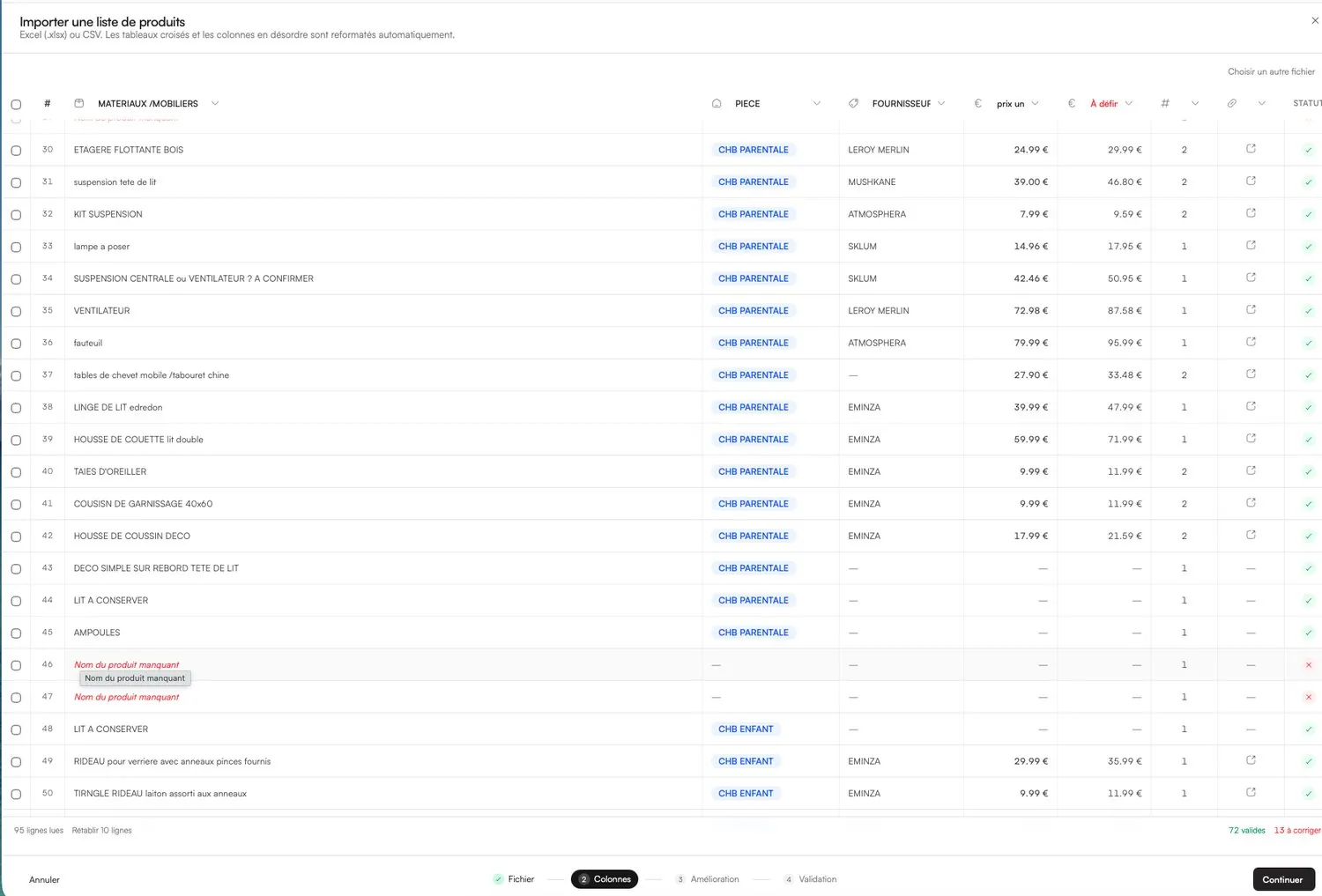
FF&E Schedule Template: Columns, Statuses and Tracking
The FF&E schedule is the backbone of every interiors project. Here are the columns it needs, how to structure it and how to keep it alive from sign-off to delivery.
Read the article ›